 In memory of Dr. Luis Bello-Espinosa, 1957 to 2026
Democratizing access to innovative, affordable brain-health education for trainees worldwide, combining clinical expertise with the latest technology and cross-disciplinary collaboration.

The lab carries his name because the work it teaches would not exist without him.
Luis Bello-Espinosa was a pediatric neurologist and epileptologist. He died suddenly on July 11, 2026, in Orlando, Florida, at the age of 68. He was born in Cartagena, Colombia, and took his medical degree at the Universidad Metropolitana de Barranquilla. Training in pediatric neurology and epilepsy followed in New Jersey and New York, then at the Mayo Clinic. He practised for ten years in Canada, and afterwards joined Orlando Health Arnold Palmer Hospital for Children, where he cared for children with epilepsy until his death.
In Calgary he worked in the Section of Pediatric Neurology at the University of Calgary and the Alberta Children's Hospital Research Institute. He was instrumental in establishing the Calgary neonatal neuro-critical care program. With Dr. Juan Pablo Appendino he took on round-the-clock reading of the continuous video EEG studies that NICU nurses were setting up at the perinatal centre. That commitment, made long before remote neurophysiology coverage was routine anywhere, is what turned nurse-initiated brain monitoring from an idea into a working service.1,2
Families remembered his bow ties, and they remembered that he gave them his whole attention. At his service on July 18, 2026, mourners were asked to wear bow ties or dark blue in his honour.
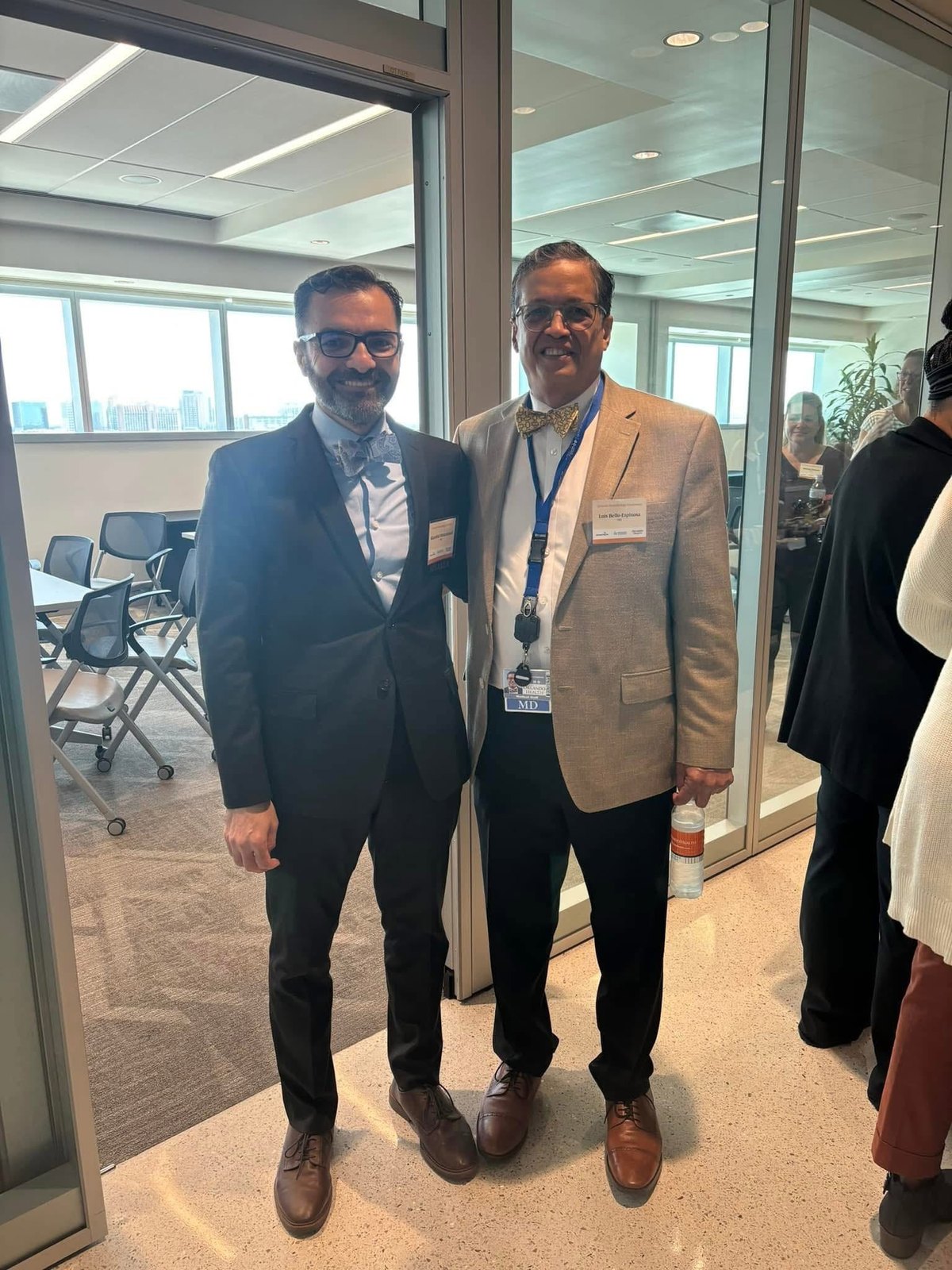
Dr. Luis Bello-Espinosa, right, with Dr. Khorshid Mohammad.
The bow tie was not an affectation, or not only one. It is an old marker of the bedside physician, part care for appearance and part practicality, since a bow tie does not swing forward onto a patient or a cot rail when you lean in to examine a baby. Neurologists took to it as readily as anyone, and Dr. Bello-Espinosa wore his everywhere. Colleagues who could not immediately place his name could always place the tie.
Calgary was among the first centres to place the setup of continuous video EEG in the hands of NICU nurses, with an epileptologist reading each study remotely at any hour of the day. Two peer-reviewed reports came out of that model, both with Dr. Bello-Espinosa as an author. Together they gave the field its early published evidence that the approach sharpens neonatal seizure diagnosis while reducing antiseizure medication exposure.
Bashir RA, Espinoza L, Vayalthrikkovil S, Buchhalter J, Irvine L, Bello-Espinosa L, Mohammad K. Implementation of a neurocritical care program: improved seizure detection and decreased antiseizure medication at discharge in neonates with hypoxic-ischemic encephalopathy. Pediatr Neurol. 2016;64:38–43.
Goswami I, Bello-Espinosa L, Buchhalter J, Amin H, Howlett A, Esser M, Thomas S, Metcalfe C, Lind J, Oliver N, Kozlik S, Mohammad K. Introduction of continuous video EEG monitoring into 2 different NICU models by training neonatal nurses. Adv Neonatal Care. 2018;18(4):250–259.
Democratizing access to innovative, affordable brain-health education for trainees worldwide.
To create state-of-the-art teaching modules by combining clinical expertise with the latest technology and cross-disciplinary collaboration.
We bridge medicine and engineering with students and professionals from Computer Science & Software Engineering, Bioengineering & Mechanical Engineering, and 3D Design.
The Neonatal Neuro-Critical Care Program, under the umbrella of the ACH Neuro-Critical Care Program, has developed the Dr. Luis Bello-Espinosa Innovation in Neonatal Neuro-Critical Care Education Lab. The lab has produced cutting-edge, innovative simulators and models, all developed locally, that have been used across the globe for clinical-care application, quality improvement and research.
Computer-based simulators and ultrasound-able 3D-printed brain phantoms, developed in partnership with the Sonographic Clinical Assessment of the Newborn (SCAN) Program.
The cranial ultrasound simulators let learners practise ultrasonography using a bank of images from patients with normal cranial structures and multiple pathologies, plus ultrasound-able 3D-printed heads with landmark brain structures. Preloaded images are selected via the computer program, while a mannequin with sensors embedded under the scalp lets the probe select corresponding image sequences to simulate real-life scanning. Components include a laptop connected to a sensor within the probe. The tools familiarize trainees with probe orientation, image-optimization skills, and ultrasound-machine knobology.
Ultrasound-able 3D-printed heads with simplified key internal brain structures, the lateral ventricles, caudo-thalamic notch, and choroid plexus.


Used in conferences and hands-on workshops across sixteen countries, India, China, the US, the UK, Canada, the Netherlands, Ireland, Italy, Saudi Arabia, the UAE, Kuwait, Oman, Morocco, Brazil, Colombia and Ecuador, with more than 1,000 participants in total. We follow up with centres afterward to help them build their programs and sustain learned skills.
Integrated into our neonatology fellowship program. All of our neonatology fellows now train in neonatal cranial ultrasonography, compared with no formal training before the models were developed.
Used to standardize the preterm brain-injury definition among radiologists and neonatologists. Two workshops in Calgary and Toronto brought together representatives from every Level III centre in the country; the resulting taskforce created a consensus practice guideline to standardize diagnosis and imaging in preterm infants nationwide.
We tested the efficacy of simulation-based learning in gaining and sustaining ultrasonography skills and published the results in a peer-reviewed journal. In development: smart tracing of lateral-ventricle borders for surface-area measurement, side-by-side MRI/US slicing, interactive self-learning quizzes, user-contributed case libraries, expanded phantoms (corpus callosum, cerebellum, third ventricle), and cerebral-artery Doppler functionality.
The anterior and middle cerebral artery simulator features the anterior and middle cerebral arteries embedded in a realistic, ultrasound-compatible brain phantom.
Anterior Cerebral Artery, Middle Cerebral Arteries, and Cerebral Peduncle.
A peristaltic pump generates flow, while a 20 cc syringe allows manual control of pulsation.
Implementation: used in training at international workshops.
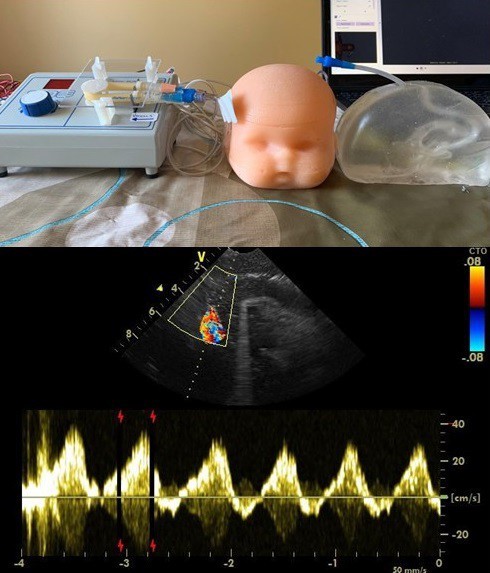
A dedicated middle-cerebral-artery model for Doppler training and demonstration.

As surgical intervention for post-hemorrhagic ventricular dilatation (PHVD) becomes rare, maintaining competency in tapping the ventricular reservoir is a challenge. We developed a "just-in-time" teaching model that includes:
Used as a "just-in-time" teaching tool each time we face a case of reservoir insertion, and at international workshops such as the Pediatric Academic Societies meeting and the American Academy of Pediatrics District VIII Section of Neonatal-Perinatal Medicine.
Free bedside tools for newborn brain health, on Google Play and the App Store.
We converted the consensus viewpoint developed between Neonatology and Radiology into a smartphone application, made free on Google Play and the App Store, to improve compliance and decrease variability. Using AI, we then developed an all-in-one tool for GMH-IVH prevention, management and diagnosis.
The updated version is now live on both stores. Eligibility follows the 2026 American Academy of Pediatrics clinical report on therapeutic hypothermia for neonatal hypoxic-ischemic encephalopathy. The calculator also supports the aEEG-based eligibility criteria used in the UK and across Europe, and it is aligned with the Canadian Paediatric Society update currently in preparation.
A bedside tool for measuring and following cerebral ventricular size in newborn infants. It standardizes how ventricular indices are recorded, so that serial measurements can be compared over time rather than read in isolation. The reference charts and management thresholds clinicians already rely on become something reachable in seconds at the incubator.
Built to improve identification of infants who suffered perinatal asphyxia and are eligible for therapeutic hypothermia, where the window of opportunity to start treatment is short.
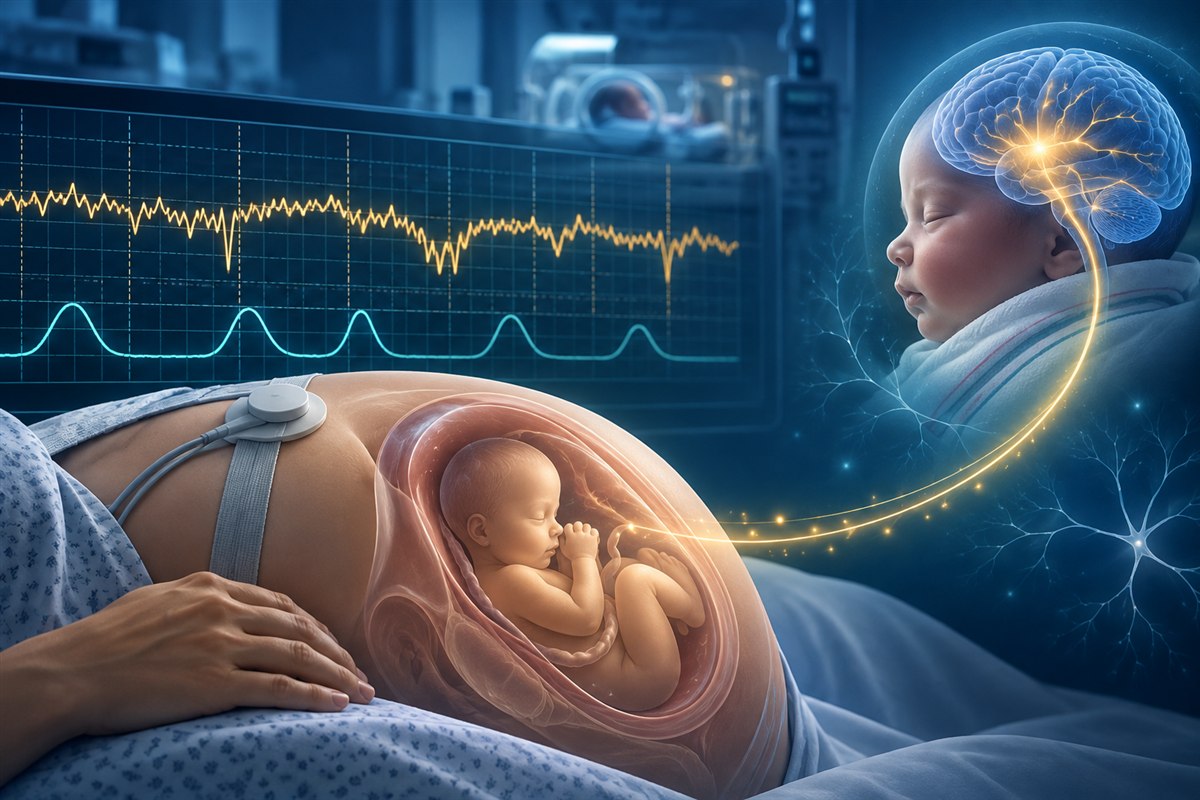 New · External accredited module
Work through five realistic Alberta cases, interpret evolving fetal-heart-rate tracings and uterine activity, compare decisions with expert consensus, and reflect on opportunities to improve perinatal outcomes.
Start at the University of Alberta HIE module →With formal family consent, full neurological-examination videos were recorded for normal and abnormal newborns, then edited and integrated into one targeted neurological examination to improve HIE identification.

A free smartphone application that serves as a checklist and decision-making tool for cooling eligibility.
Recorded videos were converted into animation scenarios used to create a virtual-reality module in which trainees can observe and perform the targeted neurological examination.
In collaboration with computer scientists, mechanical engineers and bioengineers, a neurological-examination model was developed to simulate tone assessment and posture. The project won Best in Clinical Category at the 2019 Health Hack competition.

The combined package of teaching modules and simulators was used in the Southern Alberta Neonatal Outreach Program, where we visited all Level I and II referring centres and conducted sessions on improving HIE identification.
Teaching videos demonstrate how to place EEG electrodes and generate a good-quality signal, with step-by-step "how-to" tutorials on starting an EEG study and troubleshooting. In collaboration with computer scientists, software engineers and mechanical engineers, an EEG simulator was developed to simulate EEG set-up.
Using these modules, videos, documents, small-group training, workshops and the simulator, we trained NICU nurses to set up EEG studies, helping establish neuro-monitoring in the NICU. Nurse-initiated EEG significantly decreased time to study initiation, which in turn led to a significant reduction in anti-seizure medication use and improved seizure diagnosis.
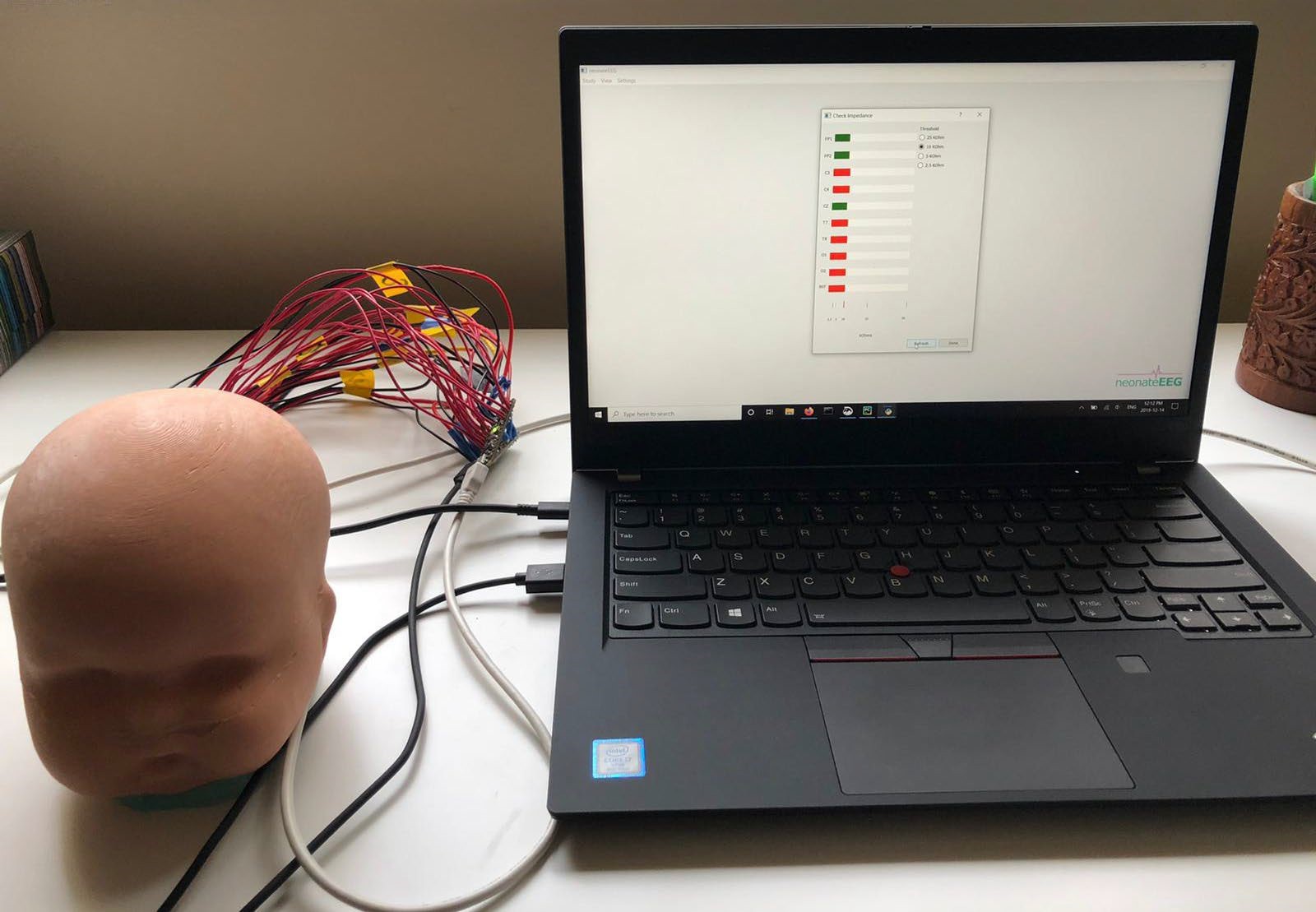
The EEG and neuro-exam simulators were used at our local, national and international workshops, with our own children volunteering as simulation models.

Open-access decision-support tools developed by the NNCC Innovation & Research group.
Train with us, collaborate on a model, or bring our simulators and modules to your workshop. We help centres worldwide build and sustain neonatal neuro-critical care skills.
Apply to Train With Us